
Does HIFU Hurt? What the Treatment Really Feels Like
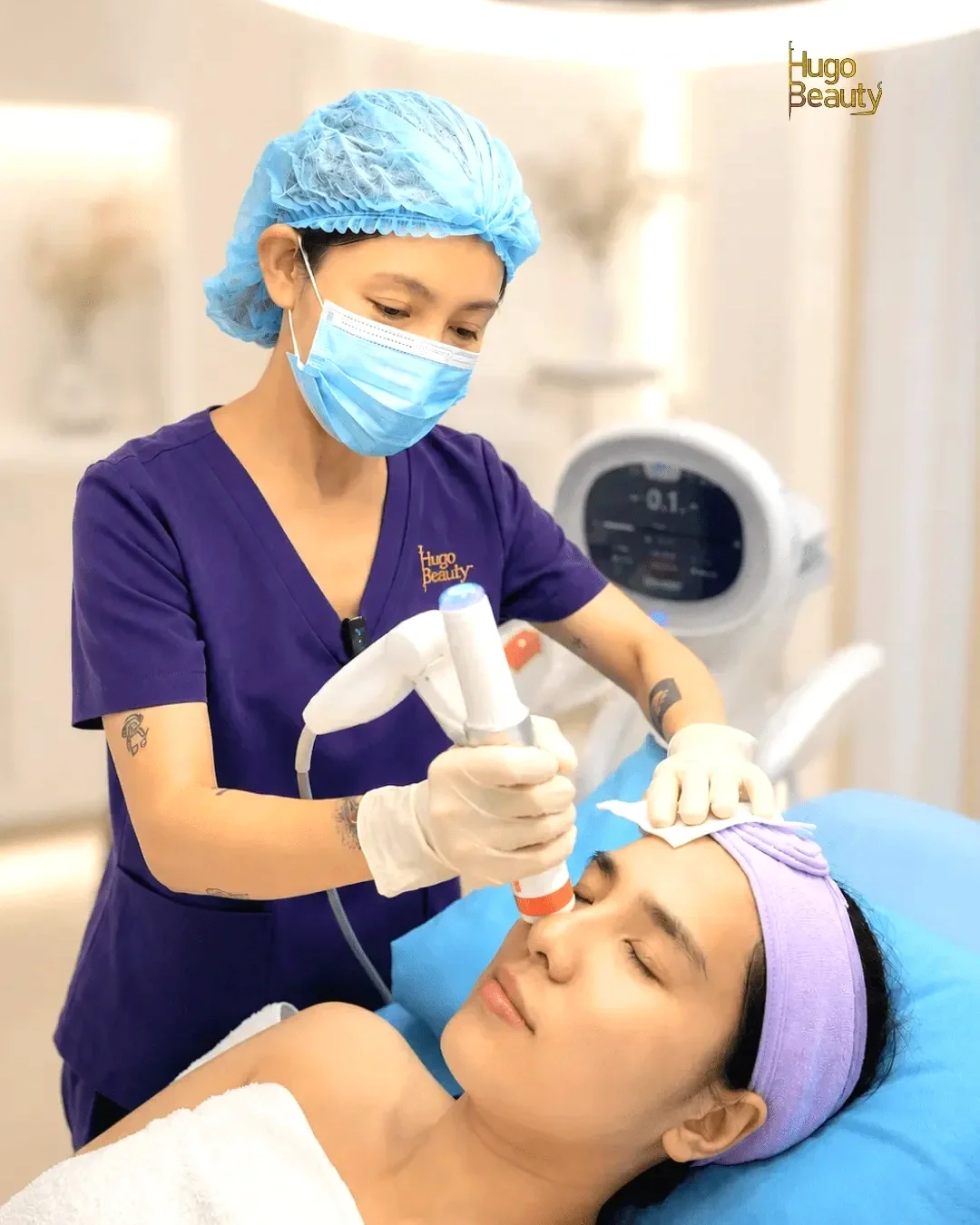
Ultraformer MPT is a non-surgical skin tightening technology available at Hugo Beauty.
"Is HIFU painful?" is the question almost every new client asks us first, usually in a slightly lowered voice. The honest answer is that HIFU is uncomfortable rather than painful for most people, but the sensation varies by area, by device and by how it is delivered. If you are still weighing the bigger picture, our guide on should you get a HIFU facelift covers that; here we go deep on the one thing people are nervous about.
What the sensation actually is
HIFU focuses ultrasound energy to a precise point beneath the skin, heating a tiny column of tissue for a fraction of a second. Each "shot" produces a brief, deep, warm prickle, sometimes described as a hot pinprick, a tiny electric flick or a dull ache that arrives and leaves almost at once. It feels like it is happening slightly inside the face rather than on it.
Between shots there is nothing, which is why most clients find the anticipation worse than the treatment. A session is a rhythm of small, tolerable moments rather than continuous pain.
Pain level by area, on a 1 to 10 scale
In our experience at Hugo Beauty, almost nobody rates HIFU above a 6, and most sit between 2 and 4 for the majority of the face. The differences come down to how much soft tissue cushions the energy and how close the shot lands to bone or nerve. Here is how clients typically describe each zone:
Cheeks (mid-face): 2–3. Fat and muscle absorb the energy; most describe warmth and a light prickle.
Jawline and jowls: 3–5. Comfortable over the fleshier lower cheek, sharper along the edge of the mandible.
Under the chin and upper neck: 3–4. Mild, though the throat area can feel oddly deep.
Forehead and brow: 4–6. Thin skin over bone makes this the most sensitive zone for many clients.
Temples: 4–5. Little padding, close to bone.
Around the mouth and chin tip: 4–5. Dense nerve supply and bone directly beneath.
The pattern is simple: anywhere you can feel bone under the skin will feel sharper. Tell us your sensitivity and we will adjust the plan, including for HIFU jawline contouring in Ho Chi Minh City, where the bony edge needs the most care.
Depth changes the feeling, not just the area
The cartridge depth also shapes the sensation. The 1.5 mm and 2.0 mm cartridges work in the upper dermis and feel like a light, warm prickle. The 3.0 mm cartridge reaches the deep dermis and feels warmer and more noticeable. The 4.5 mm cartridge targets the SMAS layer and produces the characteristic deep, dull ache, especially over the jaw and brow.
Because a treatment usually layers two or three depths, you will notice the feeling shift as we change cartridges. Our post on HIFU cartridge depths explains what each layer is for; the practical point here is that the deep passes are shorter and we do them first, while you are freshest.
The forehead and eye area are treated differently from the rest of the face — only the 1.5 and 2.0 mm cartridges, short lines, and a different set of expectations. What that session feels like and what it can realistically do is covered in HIFU for the forehead and eye area.
Why some clinics hurt much more than others
If a friend told you their HIFU was agony, the treatment itself is probably not to blame. Three things drive pain far more than the technology, and all three are choices made in the room.
The first is energy. Some clinics run every shot at maximum output on the theory that more heat equals more lift. It does not; excessive energy adds pain and can damage tissue without adding collagen. We never use "maximum energy" as a default; the setting is chosen for your skin and each zone.
The second is the device and cartridge. Cheaper machines and counterfeit cartridges often deliver energy unevenly, so some shots spike hot or misfocus onto nerve or bone. Consistent focusing is why the Ultraformer MPT feels more predictable; we explain the difference in Ultraformer MPT vs cheap HIFU machines.
The third is technique. Poor handpiece contact, rushing across bony margins or firing over a nerve line all add avoidable pain. Kieu, our nurse-trained practitioner, performs every treatment herself and maps lines around the sensitive landmarks rather than through them.
Numbing cream and other comfort measures
Topical anaesthetic cream is optional with HIFU and we are honest about its limits. It numbs the surface layers well, so it softens the shallow 1.5 mm and 2.0 mm passes, but it does not reach the SMAS at 4.5 mm, where the deepest sensation comes from. Clients who choose numbing typically report the surface prickle disappears while the deep ache remains, milder.
If you would like it, we apply the cream thirty to forty minutes before treatment. Many clients skip it and do fine. What helps more, in our experience, is slow steady breathing, starting on a less sensitive zone, and knowing the intense passes are the short ones. Paracetamol an hour beforehand is reasonable; we do not recommend anti-inflammatories on the day, because they may blunt the signal that starts collagen production.
What to tell your practitioner during treatment
The most useful thing you can do is talk. Tell us before we begin if you have found dental work, tattoos or laser difficult, or if you are near your period, sleep-deprived or anxious; all of these lower pain tolerance.
During treatment, use numbers. "That was a 6" is more useful than "ouch", because it tells us whether to reduce energy, shift the line a few millimetres or slow down. A sharp zing that travels along the jaw or into a tooth means we have caught a nerve branch and will reposition.
Do not push through something that feels wrong to be a "good patient". A well-planned session at Hugo Beauty should be tolerable throughout; if it is not, we would rather adjust than have you dread coming back.
The first 48 hours: tenderness, not pain
After the session, the sharp sensations stop as soon as the handpiece is put down. What remains is usually a mild sunburn-like warmth for an hour or two and a tender, bruised feeling when you press on the treated areas, particularly the jawline and chin, as though you have chewed too much.
This tenderness typically peaks on day one and fades by day two or three. Light swelling can accompany it, and a few people notice a brief tingling or numb patch over the jaw; this settles on its own. Pain that increases after day two, hot redness or blistering are not normal; message us. Everything beyond the first two days belongs to our HIFU aftercare guide, and the lift that follows is charted in our HIFU results timeline.
For a full breakdown of which reactions are normal, which are uncommon and which need a call — including the hollow-cheek question — read our guide to HIFU and Ultherapy side effects.
FAQ
Is HIFU more painful than laser or microneedling?
It is different rather than worse. Laser and microneedling sting on the surface across the whole treated area. HIFU produces a brief, deeper prickle or ache at each shot with nothing in between. Most clients rate the mid-face at 2–3 and the sharpest spots, brow and jaw edge, at 4–6, which is comparable to or milder than aggressive laser.
Does numbing cream make HIFU painless?
No, and we would rather say so than overpromise. Topical cream numbs the superficial layers, so it noticeably softens the shallow passes, but it cannot reach the 4.5 mm SMAS depth where the deep ache comes from. Clients who use it usually describe a milder, duller session rather than a numb one. Many skip it entirely and cope well.
Why did HIFU hurt so much at another clinic?
The usual causes are energy set too high by default, an uneven or counterfeit cartridge, or a handpiece moved carelessly over bony and nerve-rich areas. None of these is inherent to HIFU. A measured energy setting, a well-calibrated device and a practitioner who maps lines around sensitive landmarks change the experience dramatically.
How long is the face sore after HIFU?
Typically one to three days of mild tenderness when you press on the treated zones, most noticeable along the jawline and under the chin, sometimes with light swelling. The sharp sensations end the moment treatment ends. Soreness that worsens after day two, strong redness or blistering is not expected and is a reason to contact us promptly.
Conclusion
So, does HIFU hurt? For most people it is a series of brief, tolerable prickles and deep aches, mild over the cheeks and sharper near bone, around 2 to 6 out of 10 depending on the zone, and handled well with sensible energy settings, a well-calibrated device and a practitioner who listens. If you are still deciding, our complete guide to deciding on a HIFU facelift lays out the wider picture. To talk through your own sensitivity before committing, come and see us at Hugo Beauty in Phu Nhuan, Ho Chi Minh City, where we treat with the Ultraformer MPT in Ho Chi Minh City. Message us on WhatsApp or Zalo at +84 904 324 532 to book a consultation.
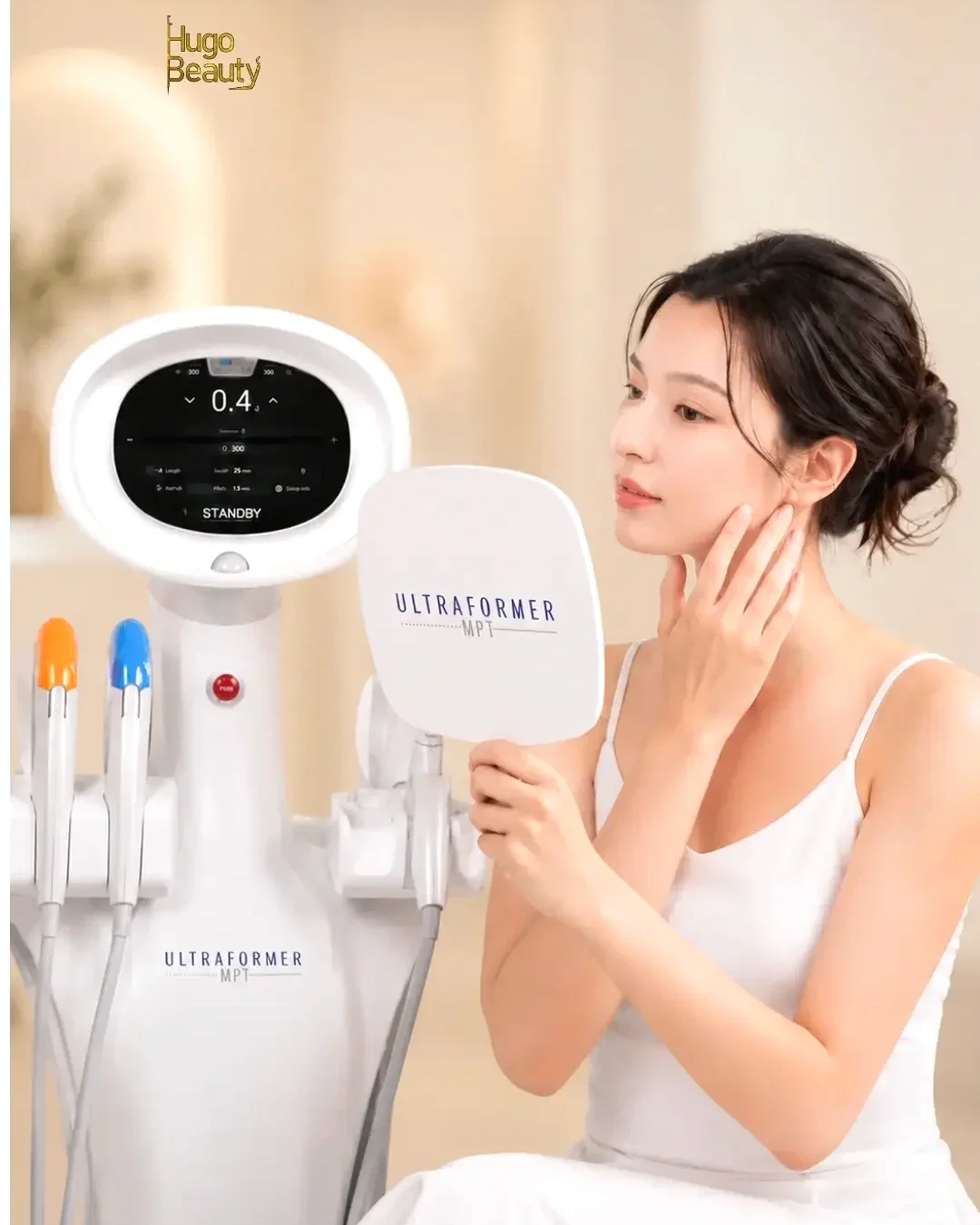
Illustration of Ultraformer MPT HIFU technology at Hugo Beauty in Ho Chi Minh City
