
HIFU and Ultherapy Side Effects: What Is Normal, What Is Not, and Why It Happens
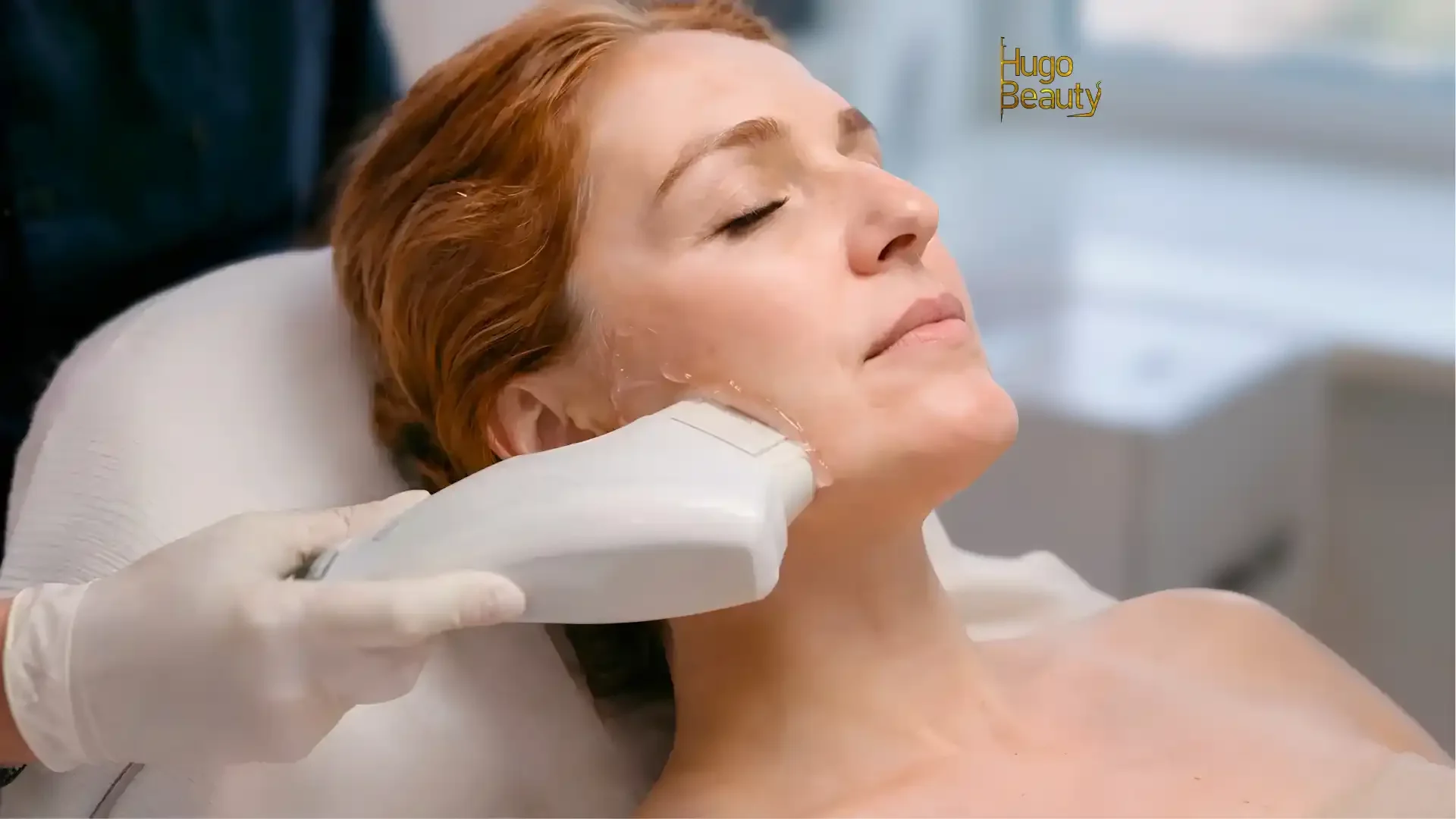
When you are weighing HIFU against Ultherapy, the question people are most reluctant to ask out loud is usually the most important one: what will my face look like afterwards? Online you will find both extremes — "no side effects at all" and "my cheeks hollowed and my face was numb for a year". The truth sits in the middle, and it is predictable once you understand what the treatment actually does.
This article is not about how the session feels — that is covered in Does HIFU hurt?. This is about what happens after: which reactions are normal and pass on their own, which are uncommon, and which are a signal to contact your clinic straight away.
Why HIFU and Ultherapy share the same side-effect profile
Both use focused ultrasound: energy is concentrated into tiny points at a preset depth under the skin, creating enough heat to contract tissue and trigger new collagen. Different machines, different brands — but what reaches your tissue is the same thing: small, controlled thermal points.
So whether you choose Ultherapy or HIFU Ultraformer MPT, your body responds with the same script: mild local inflammation (which is how repair begins), then gradual healing over days to weeks. What varies is the degree — driven by depth, energy, shot count and the hands doing the work — not the type of reaction.
Group 1 — Normal, and resolves on its own
Almost everyone experiences some of these. They are a sign the energy reached the right layer, not a sign that something went wrong.
Redness and warmth — a few hours; rarely past the next morning.
Mild swelling, most visible along the jawline and under the chin — 1 to 3 days, up to 5 with thicker tissue or a high shot count.
Tenderness when touched or when laughing hard — like facial muscles after a long day of talking; around a week.
Tingling or "pins and needles" in the treated area — a few days. This is the superficial sensory nerves settling after heat, not damage.
Faint grid-like marks matching the cartridge on the cheek or neck — first day only, fading within 24–48 hours.
How to care for your skin through this phase is fully covered in our HIFU aftercare guide, so we will not repeat it here.
Group 2 — Uncommon, usually linked to the area or the technique
Small bruises on thin-skinned areas (temples, around the eyes, neck) — tiny capillaries reacting; gone in 1–2 weeks.
Numbness lasting several weeks in one fixed spot, typically the angle of the jaw or the side of the chin, where sensory nerve branches run close to the surface. Annoying, but nearly always self-resolving.
A few small breakouts or drier skin for 1–2 weeks — the skin reacting to heat and to the pause in your usual products.
A tight feeling when opening the mouth wide for a few days after a high shot count along the jawline.
None of these are dangerous, but each is useful information for next time: fewer shots in that area, a different depth, or skipping a zone that is too thin.

Hollow cheeks and "fat loss": a real risk, and how to avoid it
This is the worry we hear most often, and it deserves a straight answer rather than reassurance.
Focused ultrasound at 4.5 mm reaches the SMAS layer. In someone with adequate cheek fat, that is exactly the depth you want for lifting. But in someone with a lean face, high cheekbones and little mid-cheek fat, the same depth can pass through a thin fat layer and reduce volume where there was little to begin with — the cheeks look more hollow and the face reads older, not younger.
When does this happen? Almost always because of the wrong depth in the wrong area, or shots placed too densely across the mid-cheek. It is not a property of HIFU or of Ultherapy — either can cause it if done badly, and either avoids it if the face is assessed first.
From your side: mention it if you have ever been described as having a lean face, or have had buccal fat removal; ask which depth will be used on your cheeks and why. At Hugo Beauty, for lean faces, Kieu generally keeps the 4.5 mm cartridge away from the mid-cheek, concentrates on the jawline and under-chin where lift is needed, and treats the cheek at a shallower depth. If this sounds like you, our article on who should not get HIFU has a section on very lean faces.
Group 3 — Contact your clinic straight away
Very rare, but you should know them so you do not hesitate:
Weakness on one side of the face: an uneven smile, one eyebrow that will not lift, difficulty pursing the lips — a sign a motor nerve branch has been affected by heat. Most cases recover over weeks to months, but they need to be monitored.
Blistering, superficial burns, distinct white or dark lines following the cartridge path — usually uneven contact or too much energy on thin skin.
Pain that increases after day 3 instead of easing, especially with hot swelling — infection or an unusual reaction needs to be ruled out.
Clearly asymmetric swelling that lasts more than a week.
A serious clinic tells you these signs before you leave and gives you a direct contact — you should not have to search for them online.
Three things that raise the risk — with HIFU or Ultherapy
A device or cartridge of unknown origin. A genuine cartridge delivers energy at the depth printed on the label. Counterfeit or expired cartridges can fire off-depth or unevenly, putting heat where nobody planned it. This is why "which machine, and how many shots are left on the cartridge" matters more than the price — see the five questions to ask a clinic before you book.
Depth that does not match the area. 4.5 mm on the jawline is right; 4.5 mm on the temple or a lean cheek is wrong. The practitioner should change cartridges by area, not use one for the whole face.
Shots placed too densely. More is not better — overlapping thermal points mean more swelling, longer numbness and a higher chance of volume loss. The right number is enough for that area, agreed before you start.
If you had HIFU elsewhere and got the side effects without the result, the two usually share a cause — the ten most common reasons a session shows nothing are listed in The HIFU Guide.
For the longer-term fears — thinning skin, faster sagging once you stop, prolonged numbness, burns, an uneven face — our article Is HIFU bad for your skin long-term? ranks each one by how real it is and how to avoid it.
Frequently asked questions
Can HIFU cause permanent damage?
In a properly assessed client, treated with a genuine device at the correct depth, reactions are temporary. Lasting problems — visible hollowing, numbness that does not recover — are almost only reported when the wrong area or depth was treated, or an unverified device was used. That is why choosing the clinic matters more than choosing the technology name.
Is Ultherapy safer than HIFU?
Neither is "safer" in an absolute sense. Ultherapy gives the practitioner an on-screen view of the tissue to guide depth; Ultraformer MPT uses fixed-depth cartridges chosen per area. Both are safe in hands that understand your face, and both can cause reactions when misused. Hugo Beauty does not offer Ultherapy, so we are not saying this to sell you something.
How long does numbness last after HIFU?
Ordinary tingling clears within days. Numbness in one fixed spot near the jaw angle can last 2–6 weeks. If it persists beyond 6 weeks, or comes with muscle weakness, go back to your clinic to be checked.
Related reading
- HIFU or Ultherapy in Ho Chi Minh City: which is right for you?
- Who should not get HIFU?
- Post-HIFU care guide
Still unsure how your skin would react to HIFU? Message Hugo Beauty on WhatsApp and we will look at your face before you decide anything.
Ask on WhatsApp