

HIFU in Ho Chi Minh City: planning a session around the city's heat, sun and humid air
This page is for people who already know what HIFU is and want to know how Ho Chi Minh City itself — strong sun all year, two seasons instead of four, humid air — should shape when they book and what they raise at the assessment. Hugo Beauty is a small aesthetic studio at 38/14A Nguyen Van Troi, Cau Kieu Ward (formerly Phu Nhuan District), Ho Chi Minh City, open 10:00–19:00 seven days a week, in English and Vietnamese. Sessions use a professional HIFU system based on Ultraformer MPT technology, and pricing starts at 1,500,000 VND for a single area; the full HIFU price list by area is in VND. Still deciding whether HIFU is for you at all? The HIFU Guide covers that.
The short version: what the climate changes, and what it does not
The weather does not change what happens under the skin, the price, the shot count or how long a result is expected to hold. It changes what surrounds the session: the weeks when your skin is most sun-exposed, how easy the following days are to read, and what to say at the free skin assessment.
Three rules follow. Book when your skin is least sun-stressed. Treat the days afterwards as a sun-planning question, not a weather one. And raise tan, pigment and daily outdoor time at the assessment, because those change the advice you are given.

Two seasons, not four: how Saigon's calendar shapes your booking window
Ho Chi Minh City runs on two seasons. The dry season, roughly December to April, brings clear skies and the most direct sun of the year. The wet season, roughly May to November, brings heavy afternoon rain, cloud that is easy to misread as low UV, and humid air day and night.
Neither season is a reason to avoid a session; they change what is easy and what needs planning. The table below is a planning aid, not a rule — the date you want to look your best matters more, and the one-year HIFU timeline explains how to count backwards.
| Months | Season | Air and sun | What to plan around |
|---|---|---|---|
| December – February | Dry, cooler | Strong direct sun, lower humidity, mild afternoons | Easiest window to keep skin covered; busiest travel weeks around Tet |
| March – April | Dry, hottest | Peak heat and the strongest midday sun of the year | Morning or late-afternoon slots; shade planned for the days after |
| May – August | Wet, warm | Short heavy downpours; cloud still lets strong UV through | Do not read cloud as protection; keep dry-season sun habits |
| September – November | Wet, humid | Damp air day and night, grey afternoons, humidity indoors too | Skin looks shinier than usual; judge by firmness, not shine |
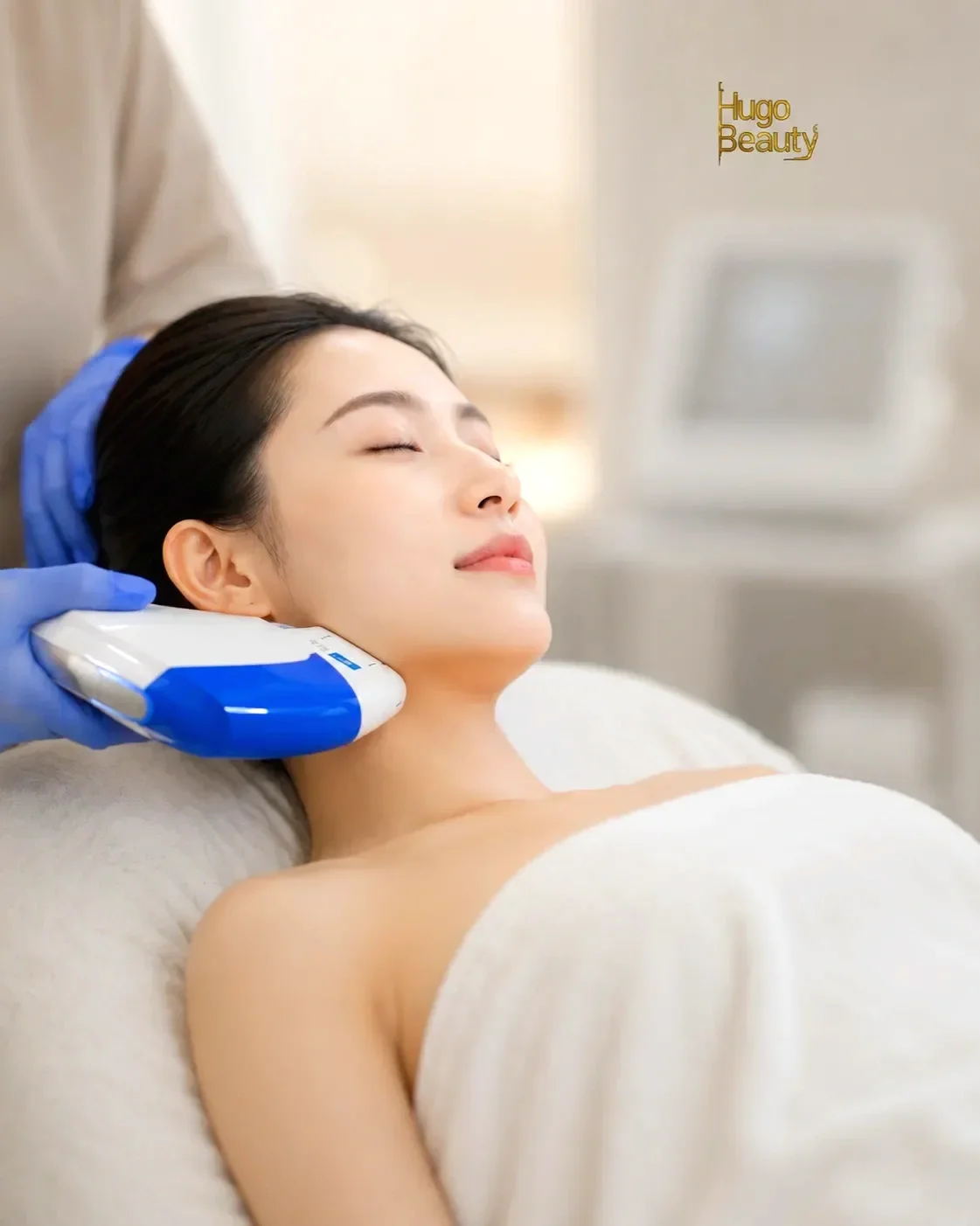
Arriving with a tan: why it comes up at the skin assessment
A tan from a beach weekend or a few days outdoors is not a reason to cancel, but mention it before anything is agreed. Freshly sun-exposed skin is warmer, often a little more reactive, and harder to photograph honestly — which quietly spoils the before-photos you will compare against later.
So say it when you arrive rather than afterwards. The skin assessment at Hugo Beauty is free and in person, and the honest answer is sometimes that a short wait gives a cleaner starting point.
Daily sun, motorbike commuting and how long a result keeps looking good
Most people here collect sun in small amounts: twenty minutes on a motorbike twice a day, a lunch walk, a school run. Those minutes accumulate across the twelve to eighteen months over which a HIFU result is judged, and they decide more about the skin at the end of that stretch than the hour you spend in the chair.
If you ride daily, the answer is unglamorous: a visor or face covering, sunscreen reapplied once during the working day, sunglasses. None of it is specific to HIFU — it is simply the part of the outcome that stays in your hands.
Firmness is not tone: where a HIFU session stops
A sunny city produces both loosening and pigment, and the two are easy to bundle together. A HIFU session is aimed at firmness and contour — not at dark spots, melasma or uneven tone, whatever your sun history.
If pigment is what bothers you most in the mirror, say that first: the honest order of work may not start with HIFU. If firmness is the problem, the main page on HIFU in Ho Chi Minh City sets out which areas are usually considered.
Air-conditioning, humid air and shine: what to ignore in the first days
Two local details come up often enough to name. The first is air-conditioning: people here move between humid outdoor air and cold, dry indoor air many times a day, and skin can feel tight and look flat for that reason alone — easy to misread as an early result.
The second is shine. In a humid September, ordinary skin looks oilier than it does in January. Neither tells you anything about the session. The one signal worth watching is the line along the jaw and under the chin, judged at the same time of day, in the same light, from the same angles.
Frequently asked questions
Does the rainy season change what a HIFU session can do?
No. Rain and cloud change the weather around your appointment, not what happens under the skin. Cloud is easy to mistake for sun protection, so the same habits apply in August as in March.
I ride a motorbike every day. Does that matter?
Over months, yes. Short daily rides are how most people here accumulate sun, so a visor or face covering and sunscreen reapplied during the day are worth more to your twelve-month result than any single decision made in the studio.
My skin is tanned from a beach trip. Should I wait?
Mention it when you book and again when you arrive. Fresh sun leaves skin warmer and harder to photograph honestly, so a short wait sometimes gives a cleaner starting point. The assessment is free, so nothing is lost by asking.
Do air-conditioned offices change how my skin looks afterwards?
Moving between humid outdoor air and cold indoor air can leave skin tight and flat-looking for a few days. That is the room, not the session.
Does humid weather make my skin look oilier after a session?
It can, whether or not you have had a session. Shine measures nothing. Look at the line of the jaw and under the chin instead.
Does HIFU help with dark spots or melasma from years of sun?
No. A HIFU session is aimed at firmness and contour, not pigment. If uneven tone is your main concern, say so at the assessment — book a HIFU consultation.
Not sure whether to book now or wait for your tan to fade? Send three photos on WhatsApp and Kieu will tell you what she sees.
Book an Appointment