

HIFU in Ho Chi Minh City 2026: your one-year timeline, from seven days before to the next session
Most writing about HIFU stops at the session itself. But one HIFU session is not one appointment — it is a year: something to do before, three days to protect, two moments where the result can actually be read, and one point where you go back.
This page is that timeline, written for anyone planning HIFU in Ho Chi Minh City during 2026. Each milestone answers three things only: what you do, what is normal, and whether it costs anything. The explanation of how HIFU works lives in the HIFU guide; this page is the calendar.
The seven milestones of a HIFU year
Read it as a calendar. Each row is a point in time, not a step you have to buy.
| Milestone | What you do | What is normal | Does it cost anything |
|---|---|---|---|
| 7 days before | Stop retinol and acids, stop exfoliating, take three reference photos | Skin back to baseline, no flaking | No |
| Session day | Arrive 30–40 minutes early if numbing is used; confirm areas and energy level | Waves of heat during the shots; slight flushing afterwards | Yes — the whole year’s cost sits here |
| First 72 hours | Wash gently, skip saunas and heavy training | A tight feeling, slight tenderness when pressed | No |
| Week 2 | Retake the same photos, same angle, same light | Mild tightness as old collagen contracts | No |
| Month 2–3 | Compare with the pre-session photos; note which areas changed | This is when the result is clearest | No |
| Month 6 | Mid-point check: see how much is holding | The result is steady, not yet fading | No, for a review visit |
| Month 12–18 | Book the next session, usually the same scope or narrower | Contours gradually soften again | Yes — the next session |
Seven milestones, but only two of them cost money. Most of a HIFU year is waiting and comparing photos.
Seven days before: the only part fully in your hands
This is the milestone most people skip, and the only one where the result depends entirely on you. The calmer your skin, the closer the session can run to the right energy level instead of being dialled down because the skin is reactive.
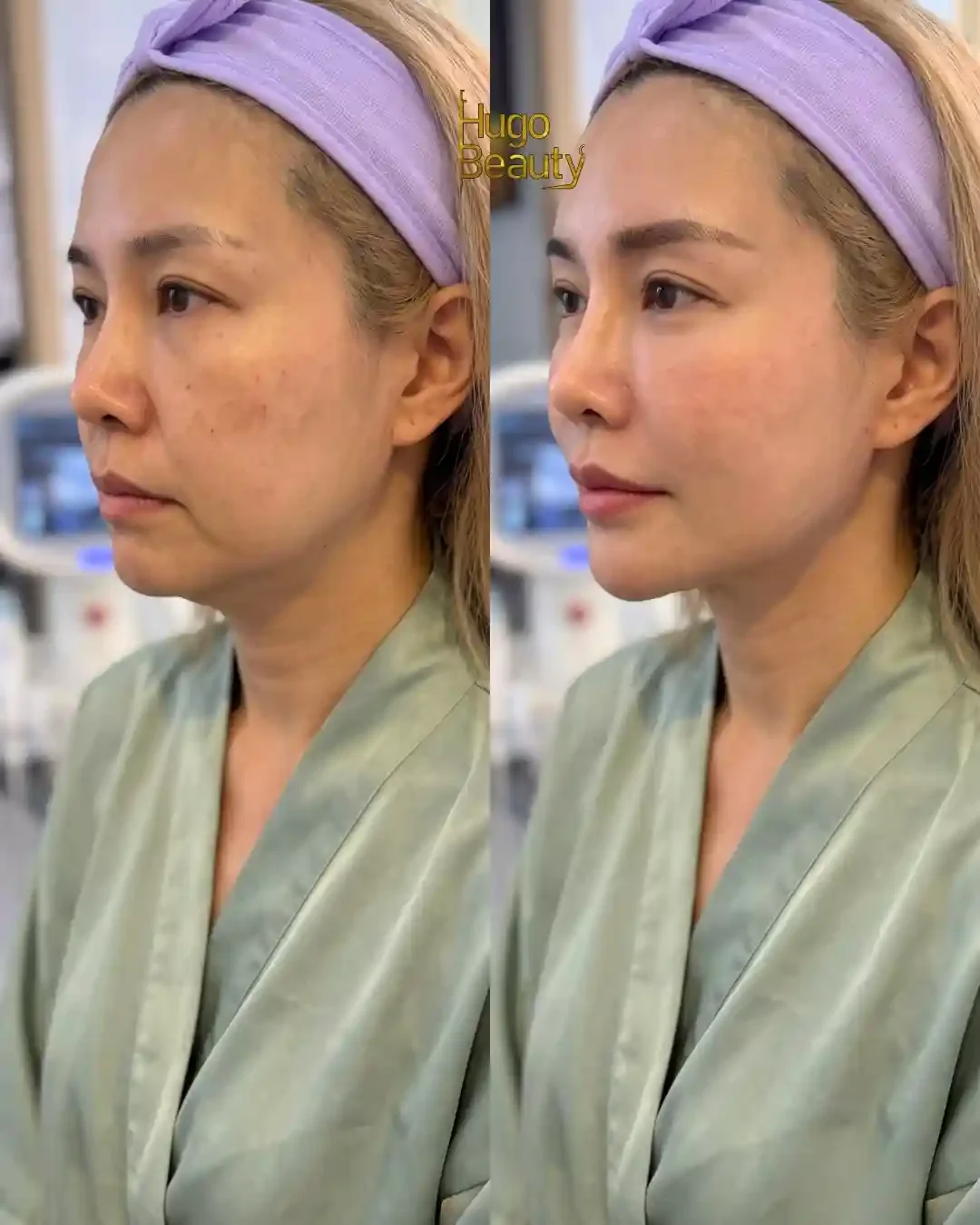
Three things, in order of importance: stop retinol and exfoliating acids 5–7 days ahead, no physical exfoliation in the last 3 days, and take three photos — one from the front and two side profiles, left and right — in natural light. That photo set is what you will compare against in month two, and without it every later judgement is just a feeling. The full checklist is in how to prepare for a HIFU session.
Session day: the whole year’s cost sits here
Length depends on scope, not on the provider: a single area such as the jawline or under the chin takes 30–45 minutes, the full face 60–75 minutes, face and neck 75–90 minutes. If someone books you in for 20 minutes for a full face, that number tells you more than the price list does.
Settle three things before you lie down: which areas are treated, the shot count for each area, and whether the energy level is recorded. Recording it is what gives the next session something to raise, lower or hold — why the shot count matters is covered in how to read a shot count.
The first 72 hours: three days to protect, not a week off
HIFU needs no downtime, but the first three days have clear edges: water only on the evening of the session, cleanser again the next morning, light training after 24 hours and heavy training after 48, saunas and swimming pushed past the 72-hour mark. The hour-by-hour version is in can I wash my face after HIFU.
Tightness and slight tenderness when you press the treated area are normal in these days. What is not normal — and worth messaging your provider about straight away — is listed in HIFU and Ultherapy side effects.
Week 2: retake the photos, draw no conclusions
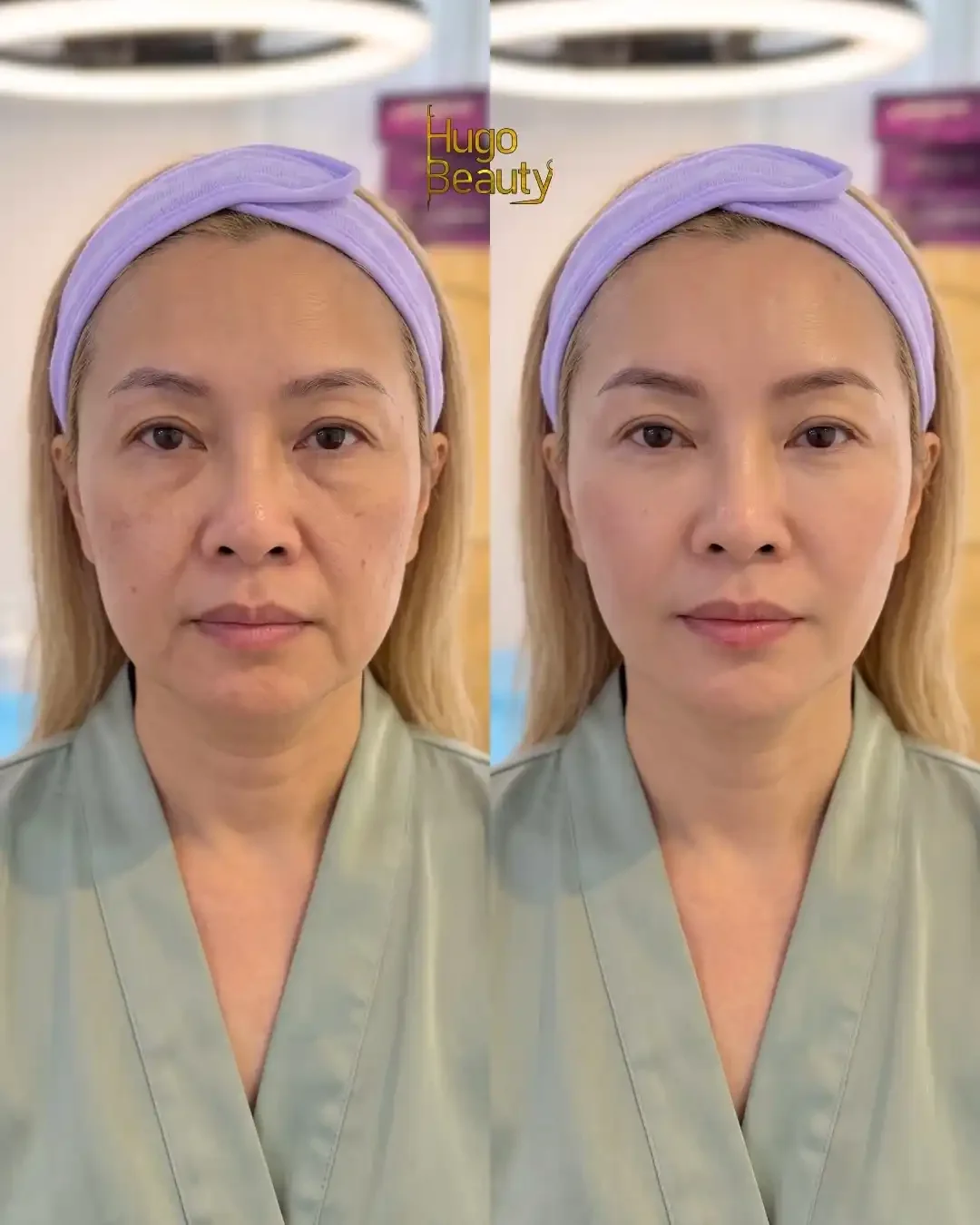
Right after the session and for the first 1–2 weeks, the skin feels slightly tighter as old collagen contracts; the real result builds gradually over the following 8–12 weeks as new collagen forms. So what you see in week two is not the result — it is a marker to compare against.
The only task at this milestone: retake the same three angles, same light, no make-up. Put the two sets side by side and put them away.
Month 2–3: the one milestone for judging
The result is clearest at month 2–3, once the new collagen has formed. This is when you open both photo sets and answer three questions: which area changed clearly, which barely moved, and which one you want prioritised next time.
If the area you care about most is the one that moved least, the answer is usually not “repeat sooner” but “that area may sit outside what HIFU can do”. Who should not get HIFU draws that line.
Month 6: a mid-point check, usually free
Half a year in is worth one look at the skin, even when everything still seems fine. The point is not to sell another session but to know how much is holding, and to decide whether the next one keeps the same scope or narrows to the areas that need it.
At Hugo Beauty this review is free, like the initial consultation.
Month 12–18: the next session, usually narrower
One session typically holds for 12–18 months and then fades gradually with age and skincare habits. HIFU is usually one session, maintained every 12–18 months — not a course repeated by week or by month.
What many people do not expect: the second session is often narrower than the first, because by then you know which areas respond. For a lot of clients the first round is the full face and the next one is only the jawline and under the chin — and the cost drops with it.
Three sample plans for 2026
The three most common options, at Hugo Beauty’s listed prices. What they share: the first year holds one paid session.
| Plan | Scope of the first session | Shots | Length | First-year cost | Next session |
|---|---|---|---|---|---|
| A — One area | Jawline or under the chin | 250–300 | 30–45 minutes | 1,500,000–2,000,000 VND | After 12–18 months, usually the same area |
| B — Full face | Full-face lifting | 800–1,000 | 60–75 minutes | 4,000,000–4,500,000 VND | After 12–18 months, many narrow it to 1–2 areas |
| C — Face and neck | Full combo: face + neck | 1,050–1,200 | 75–90 minutes | 4,500,000–5,000,000 VND | After 12–18 months, usually the same scope |
Listed prices; the breakdown by area is on the HIFU pricing page. The consultation and the mid-point review are not charged.
Frequently asked questions
How many HIFU sessions in one year?
For most people, one. HIFU is usually one session, maintained every 12–18 months — so a calendar year normally holds a single paid session, and the rest of the year is follow-up milestones that cost nothing.
What does a year of HIFU cost in Ho Chi Minh City?
Exactly what that one session costs. At Hugo Beauty: a single area such as the jawline or under the chin is 1,500,000–2,000,000 VND, full-face lifting is 4,000,000–4,500,000 VND, and the face-and-neck combo is 4,500,000–5,000,000 VND. The breakdown by area is on the HIFU pricing page.
How long until I see the result?
Right after the session and for the first 1–2 weeks, the skin feels slightly tighter as old collagen contracts; the real result builds gradually over the following 8–12 weeks as new collagen forms. The result is clearest at month 2–3.
Should I buy a multi-session package for the year?
With HIFU, usually not. One session holds for 12–18 months, so a package compressed into a few months is a reason to ask about the gap between sessions before you pay.
Which month of the year should I book?
Count backwards from the date you want to look your best. Because the result is clearest at month 2–3, a session for Tet or a wedding should land roughly 2–3 months ahead, not a few weeks before.
I had HIFU elsewhere — where do I start on this timeline?
Start at the review milestone: send three photos on WhatsApp — one from the front and two side profiles, left and right — with the date of your last session. The skin assessment at the studio is free, and the answer may well be that nothing more is needed yet.
Want a timeline built around your own face? Send three photos on WhatsApp and Kieu will say which area to start with and roughly when in the year to book.
Book an Appointment