
HIFU at 30, 40, 50: The Best Age to Start and What Changes
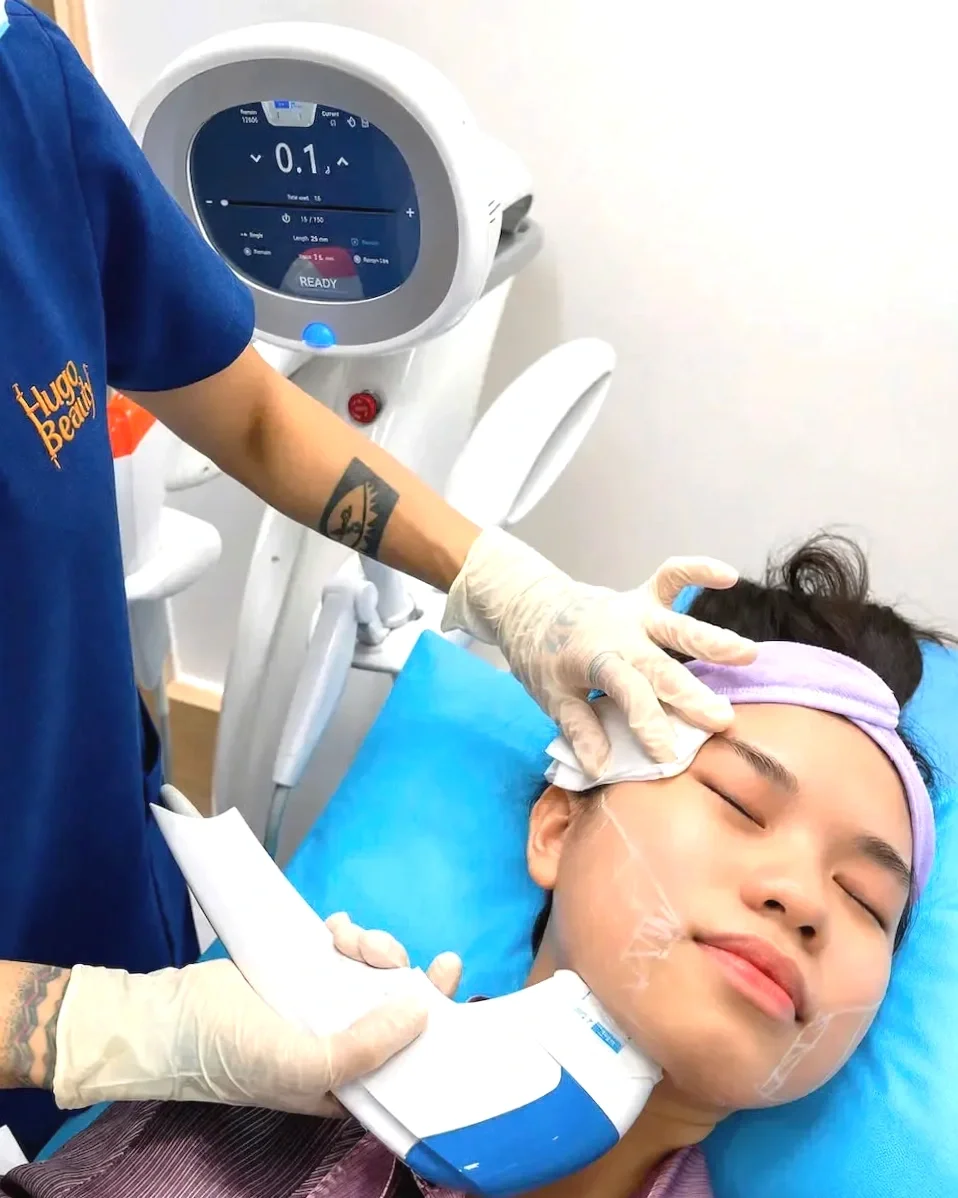
Illustration of HIFU Ultraformer MPT treatment for facial contouring and skin tightening
"What is the best age for HIFU?" is the question we hear most often at Hugo Beauty, and the honest answer is that the calendar matters far less than what is happening under your skin. Here we walk through how the face changes decade by decade, what HIFU can realistically address at each stage, and when age is simply the wrong thing to measure. If you are still weighing up the treatment as a whole, start with our complete guide to should you get a HIFU facelift.
Why age is a rough guide, not a rule
HIFU delivers focused ultrasound energy to precise depths, warming tissue enough to trigger new collagen and tighten the deeper support layer. That mechanism does not care how old you are. It cares whether there is laxity to tighten, how much collagen your body can still make, and how thick and resilient the tissue is.
Two people born in the same year can have faces a decade apart biologically. Sun exposure, smoking, sleep, weight changes, genetics and hormones shape the skin more than a passport date. That is why, at Hugo Beauty in Ho Chi Minh City, our first consultation assesses tissue, not birthdays. Decades remain a useful shorthand, though, because the typical changes cluster predictably.
HIFU in your late 20s and 30s: the preventive window
By the late 20s, collagen production has already begun its slow decline, but the skin usually still looks firm. What we notice first in the 30s is subtle: a jawline a touch less crisp in photographs, cheeks that sit fractionally lower, fine lines that no longer vanish at rest. Few people in this decade are "sagging" in any obvious sense.
At this stage HIFU is a preventive tool. Because the tissue is still elastic and collagen-rich, a light, well-planned session tends to produce a clean, natural firming, mainly at the 1.5 mm and 3.0 mm depths, with the deeper 4.5 mm layer used sparingly if at all. The goal is to keep the foundations strong rather than lift anything back into place.
In our experience, the 30s client who benefits most has early jawline softening, mild loss of cheek definition, or a family history of early laxity. If your skin is still tight, we will usually tell you to wait.
HIFU in your 40s: the corrective sweet spot
The 40s are when most of our clients first arrive, and it is the decade where HIFU typically does its most satisfying work. Collagen and elastin have thinned and the mid-face fat pads have begun to descend, producing the changes people notice in the mirror: early jowls, a deeper nasolabial fold, a softer angle between chin and neck.
Here HIFU shifts from preventive to corrective. The 4.5 mm cartridge, which reaches the SMAS layer that surgeons tighten in a facelift, becomes central to the plan for the lower face and jawline, while the shallower depths address texture and fine lines. There is real laxity to work on, so results are easier to see, and the tissue still responds well.
This is also the decade where personalisation matters most. A 44-year-old with a naturally slim face needs a very different line count and energy setting from one with fuller cheeks, which is why Kieu maps every treatment individually rather than from a template. Our HIFU face lifting service in Ho Chi Minh City explains how a full-face session is structured.
HIFU in your 50s and beyond: honest expectations
By the 50s, particularly after menopause, collagen loss accelerates and the skin becomes visibly thinner and drier. Laxity is now established: jowls, a heavier neck, hooding of the upper eyelids, and a "V" shape that has become more of a square. Bone and fat volume have also changed, so the skin has less to drape over.
HIFU still helps in this decade, and many of our happiest clients are in their 50s and early 60s, but expectations need calibrating. The treatment tightens what is there; it does not replace lost volume or lift a heavy jowl the way surgery would. Typically we see clearer jawline definition, a firmer neck, a modest cheek lift and fresher texture, not a transformation.
Because collagen production is slower, the visible change also takes a little longer to arrive; our post on the HIFU results timeline covers when results appear and how long they hold. For clients in this decade we are also more conservative about energy, since thinner tissue needs a careful hand rather than a stronger one.
What is the "best age" for HIFU, then?
If we had to give a single number, we would say the early-to-mid 40s, when visible need and biological response are best balanced: enough laxity to see a difference, enough collagen-building capacity to make it last. But that answer hides more than it reveals.
A better way to think about it is in terms of goals. In the 30s the aim is preventive: keep the jawline and mid-face where they are and slow the descent. In the 40s the aim is corrective: bring early sagging back and restore definition. In the 50s and beyond the aim is corrective with realistic limits: improve tone and tighten the neck and lower face. Each is a legitimate reason to start.
How often to return once you have started is a separate question, and our guide to how many HIFU sessions you need walks through realistic schedules.
When age is not the right criterion
There are situations where we set the age question aside completely. The first is face shape and fat distribution. A 32-year-old with a very lean, angular face may not suit deep 4.5 mm treatment despite being "young", because there is little volume to protect; we explain why in our post on HIFU and sunken cheeks. Meanwhile a 55-year-old with fuller cheeks might respond beautifully.
The second is skin condition rather than skin age. Heavy sun damage, years of smoking or significant weight loss can produce laxity in someone's 30s that looks like the mid-40s, while lifelong sun protection can carry someone to 50 with skin that behaves a decade younger. We treat the tissue we see, not the age we are told.
The third is health and history. Certain medical conditions, recent procedures and medications matter more than any birthday, and we cover them in who should not get HIFU. Finally, there is what you actually want. Someone hoping for a surgical-level lift at any age will be disappointed; someone who wants subtle, natural firming will usually be pleased regardless of decade.
FAQ
Is 30 too young for HIFU?
Not necessarily, but it depends on what you see. If the jawline has started to soften or cheek definition is fading, a light preventive session in the early 30s can be worthwhile. If the skin is still firm with no early signs, we would typically advise waiting rather than treating something that is not yet there.
Is there an upper age limit for HIFU?
There is no fixed cut-off. We treat clients in their 60s and occasionally older, provided the skin is healthy and expectations are realistic. What changes with age is the size of the result and the energy we use: thinner, less elastic tissue calls for a more conservative plan and a gentler, more gradual improvement.
Does HIFU work better on younger skin?
Younger skin produces collagen faster, so it responds more readily, but it also has less laxity to correct, so the visible change is smaller. In our experience the most noticeable results come in the 40s, when there is real early sagging and the tissue still has strong regenerative capacity. Both ends of the spectrum can benefit.
Should I start HIFU before I see any sagging?
Only if there are early signs, such as a subtly less defined jawline or a mid-face that sits lower in photos than it used to. Treating perfectly firm skin offers little benefit. We would rather assess your face honestly and tell you to come back in a few years than sell you a session you do not yet need.
Conclusion
The best age for HIFU is less about the decade you are in and more about the stage your skin has reached and the result you are hoping for: preventive firming in the 30s, corrective lifting in the 40s, and honest, measured tightening in the 50s and beyond. If you would like the wider picture, our guide to HIFU facelift pros and cons sits alongside this post. And if you would like Kieu to look at your face in person and tell you frankly whether now is the right time, we would be glad to see you at Hugo Beauty in Phu Nhuan, Ho Chi Minh City. Message us on WhatsApp or Zalo at +84 904 324 532 to arrange a consultation.
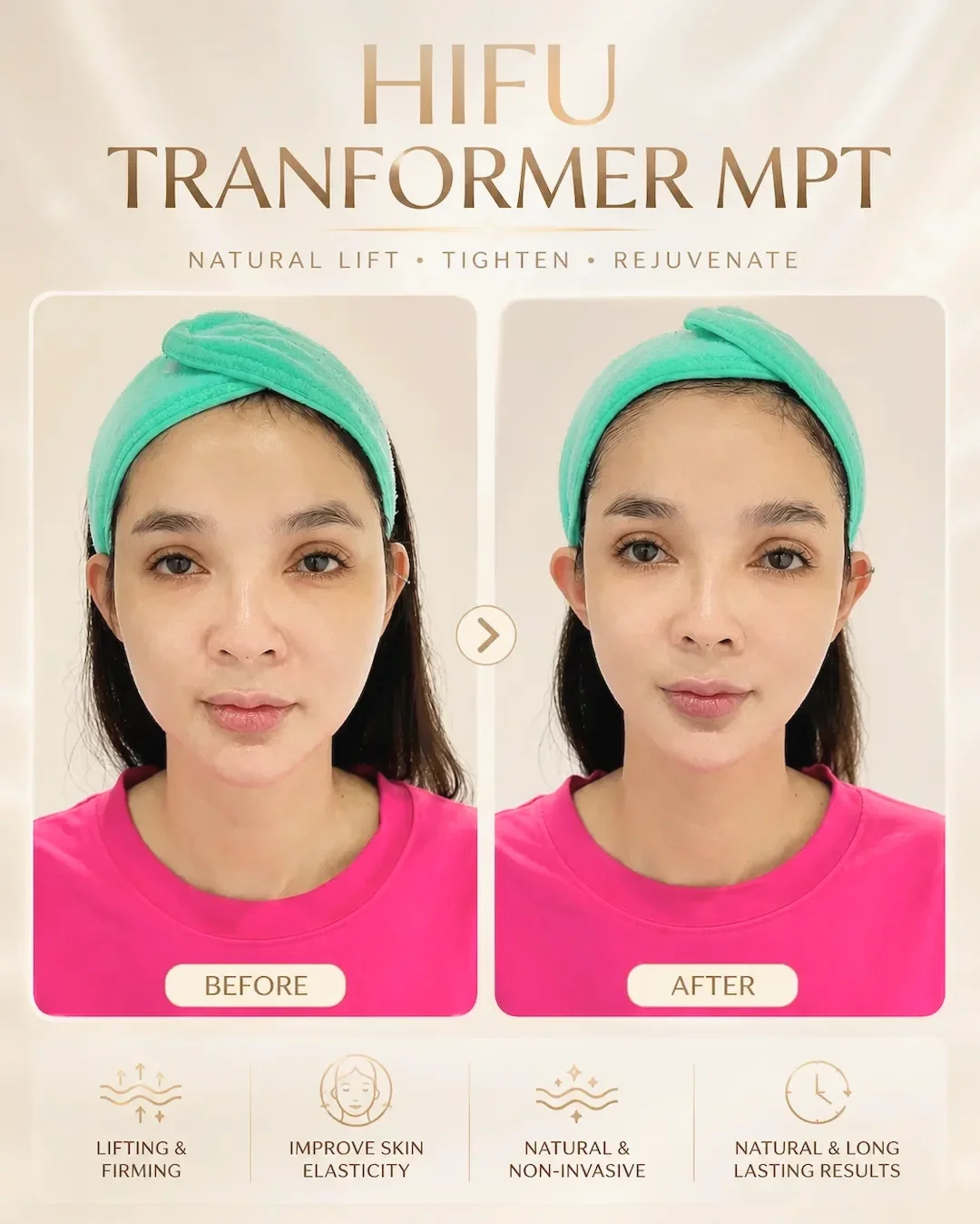
Before-and-after results following HIFU Ultraformer MPT treatment at Hugo Beauty, showing improved facial contour definition and a firmer, more refreshed appearance.
