
Dry, dull skin that has lost its bounce: why moisturiser is not enough, and what deep hydration really changes

A sentence we hear almost every week at Hugo Beauty: “I moisturise properly and my skin is still dry.” Then the details follow — tight and stinging right after cleansing, dry again two hours after cream, and yet the nose and forehead are shiny by four in the afternoon.
It sounds contradictory, but it is the single most common skin story in Ho Chi Minh City. Most of those faces are not dry. They are dehydrated. Two different things, and they need two different answers. This article explains the difference, how far creams and serums can take you, a ten-second check you can do at home, and when deep hydration at a studio is actually worth it.
Dry skin and dehydrated skin are not the same thing
Dry skin is skin that lacks oil. It is a skin type you are born with: quiet oil glands, usually thin skin, very little breakout, small flakes around the nose and the corners of the mouth, and almost never shiny. Dry is a type, not a phase.
Dehydrated skin is skin that lacks water in its upper layer. That is a condition, and any skin type can fall into it — oily skin included. The surface can no longer hold water, so it feels tight, while the oil glands carry on as usual or even step up to compensate. The result is the combination people describe as “dry and oily at the same time”: tight after washing, shiny by late afternoon.
The distinction matters because it decides what you should add. Skin short of oil needs a richer layer to seal it. Skin short of water needs water, plus a barrier strong enough to keep it there — piling a heavier cream onto dehydrated skin usually just feels suffocating and does nothing for the tightness.
In this city, the second group is by far the larger one. And it has remarkably little to do with age.
Three things clients describe, and what each one means
Tightness right after cleansing. That squeaky-clean feeling many people like is actually the sign that the skin's natural protective layer has just been stripped a little too far. Tight for a few minutes, easing once you apply toner — that is dehydration, not cleanliness.
Foundation going patchy and clinging to flakes. The foundation is not at fault. When the surface is short of water, cells shed unevenly, so base catches on the rough spots and looks grey a few hours in. This is a surface sign: it appears fast and it improves fast.
Skin looking noticeably duller by late afternoon. Fine in the morning mirror, tired by three or four, with the fine lines around the eyes and mouth more visible. Hydrated skin reflects light evenly, so it looks bright; dehydrated skin scatters it, so it looks flat. Most people put this down to poor sleep and never question it.
How life in Ho Chi Minh City pulls water out of your skin
A normal day for skin here looks like this: motorbike under hard sun in the morning, eight hours in dry office air conditioning, out for lunch and back into the cold, then a very thorough evening cleanse because your face feels full of dust and oil — and a late night at the weekend. Each item is small. Together they drain water from morning to night.
Sun does the most damage and gets the least credit. It does not only darken skin; it weakens the barrier that holds moisture, so the skin keeps losing water for days afterwards.
Air conditioning comes second. Cold indoor air is very dry and pulls moisture from every surface it touches, your face included. Eight hours a day, five days a week, adds up to a lot.
Over-cleansing comes third, and it is the easiest to fix. Feeling oily pushes people to wash three or four times a day with a strong foaming cleanser. Each wash removes a little more of the protective layer, and the more dehydrated the skin gets, the harder the oil glands work to compensate — exactly the loop you are trying to escape.
That is why two people of the same age using the same products can end up with completely different skin, simply because one rides a motorbike and the other does not. Comparing your skin with someone else's tells you almost nothing. It is also why lips — the thinnest skin on the face, with no oil glands at all — usually show the first signs; our piece on dry lips, lip lines and a fading border covers that area in detail.
A ten-second check in front of the mirror
Cleanse, pat dry, apply nothing, and wait ten minutes. Stand by a window in natural light, no flash.
Pinch a small fold of skin on your cheek, hold for three seconds, and let go.
Watch the spot you just released.
It springs back immediately, flat again in under a second: elasticity and hydration are in good shape. Keep your habits steady and your sunscreen consistent.
It springs back slowly, with a fine crease visible for a few seconds: your skin is dehydrated. This is the biggest group, and the one that improves most visibly once the routine is corrected.
It springs back slowly and the surface shows small criss-crossing lines like a fine net: the upper layer has been short of water for a long time. Cream will make it more comfortable, but it will struggle to bring the bounce back on its own.
One more thing worth doing: take a front-on photo at eight in the morning and another at four in the afternoon, same spot, same window light. If the afternoon shot looks distinctly duller rather than simply shinier, you are losing water through the day — it is not your make-up.
What creams, serums, sunscreen and masks can and cannot do
| What you use | What it can do | What it cannot do | How to use it |
|---|---|---|---|
| Sealing moisturiser (ceramides, squalane, shea) | Holds on to the water already there and eases tightness for a few hours | It does not add water to a layer that is short of it | Apply while skin is still slightly damp; oily skin needs a lighter texture but still needs this step |
| Hydrating serum (HA, B5, glycerin) | Draws water into the upper layer, so skin looks plumper and brighter through the day | The effect lasts the day; it does not repair a weakened barrier | Apply to damp skin and seal immediately, or it dries you out further in air conditioning |
| Sunscreen | Stops the barrier weakening further, so skin dulls more slowly over time | It does not bring back bounce that has already gone | Wear it indoors by a window too; reapply at midday if you go out |
| Sheet masks | Soft, plump skin for a few hours — genuinely useful before an occasion | It does not change the underlying condition of the skin | Two or three times a week is plenty; past twenty minutes the sheet starts pulling water back out |
| Exfoliation | Base sits more smoothly and skin looks brighter straight afterwards | Overdone, it leaves skin more dehydrated and more reactive | Once a week at most while skin is dehydrated; stop entirely if it stings |
| Water intake and a humidifier | Support from the inside, and less water loss when you sit in cold air all day | Drinking more water alone will not stop the tightness | A humidifier on your desk does more than a few extra glasses |
This table is a guide. The same product can suit one person and not another, depending on the skin and on daily habits.
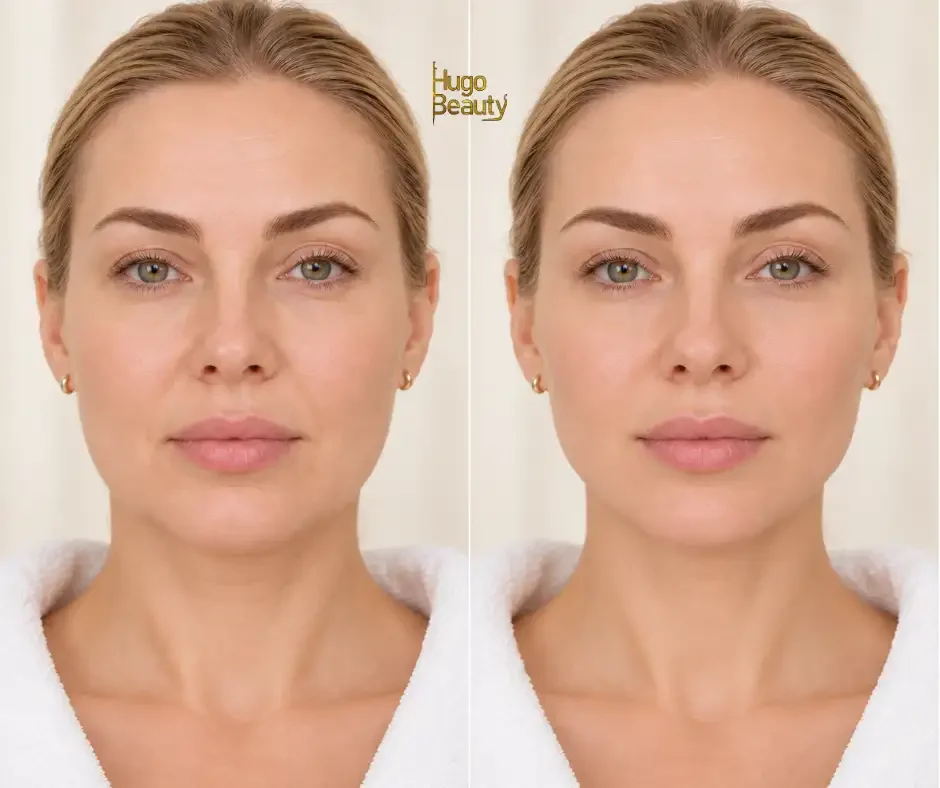
Four habits that dehydrate skin faster
Washing with hot water. Hot water feels wonderfully clean, but it strips the protective oil layer far faster than cool water does. Use cool or barely warm water, and wash twice a day at most.
Over-exfoliating. When skin looks dull, the instinct is to exfoliate harder and more often. But the dullness comes from a lack of water, not from thick dead skin — exfoliating more only weakens the barrier and the dullness returns sooner.
Skipping sunscreen indoors. Sitting next to an office window all day is still sun exposure. This is a very common reason skin keeps getting duller in people who “hardly ever go outside”.
A routine with too many steps. Seven or eight products every evening, two or three of them strong actives, leaves skin no time to recover. When skin is dehydrated, cutting back to a gentle cleanser, a hydrating serum, a sealing moisturiser and sunscreen for two weeks usually works better than adding anything new.
When cream is no longer enough, and what Hugo Beauty looks at first
When you have corrected your cleansing, added a hydrating serum and a sealing moisturiser consistently for four to six weeks, and your skin is still tight in the morning and dull in the afternoon. When the cheek-pinch check still shows a slow spring-back. Or when foundation still goes patchy after two or three different bases.
At that point the problem is usually not the product you are applying. It is that the layer underneath is no longer holding water — and anything topical only reaches the very surface.
What surprises most people at a Hugo Beauty consultation is that we rarely start by choosing a session. The first step is reading the skin itself: is the barrier strong or compromised, is it short of water or short of oil, and which part of your daily routine is pulling water out. Skin that is irritated needs calming first, not adding to. Only once the base is settled do we discuss which deep-hydration route fits, and we always start light, review, and only then consider more. The full approach is on our personalized skin care and deep hydration page, and what to do and avoid in the first few days is set out in our aftercare guide.
If you are weighing up PRP, exosomes and skin boosters — three names that come up together but take three different routes — our piece on how PRP, exosomes and skin boosters differ compares who each one suits and how soon you see a difference.
Frequently asked questions
My skin is still oily — how can it be dehydrated?
Oily and dehydrated happen together very often, and it is the most common combination in Ho Chi Minh City. The oil glands keep working, but the upper layer is short of water, so skin feels tight and looks shiny at the same time. The clearest sign is tightness immediately after cleansing.
Will drinking more water fix dry skin?
Drinking enough is a good baseline for the body, but on its own it does not move water into the outermost layer of skin. If you already drink plenty and your face is still tight, the issue is the moisture barrier, not your water intake.
How long before I see a difference after changing my routine?
The tight feeling usually eases within one to two weeks. Brightness and a smoother base tend to show after about four weeks. If nothing has changed after six weeks, that is the point to have a specialist look at the skin itself.
Will deep hydration at a studio make my skin look done?
The aim at Hugo Beauty is the opposite: skin that is hydrated, smooth and naturally bright, with nobody able to name what you had. We start light, book you for a review, and only add if you want it.
Keep reading
